

VARO
Adjustment Module 2.0 – 30 mm
199,00 € – 224,60 €
plus 19% VAT
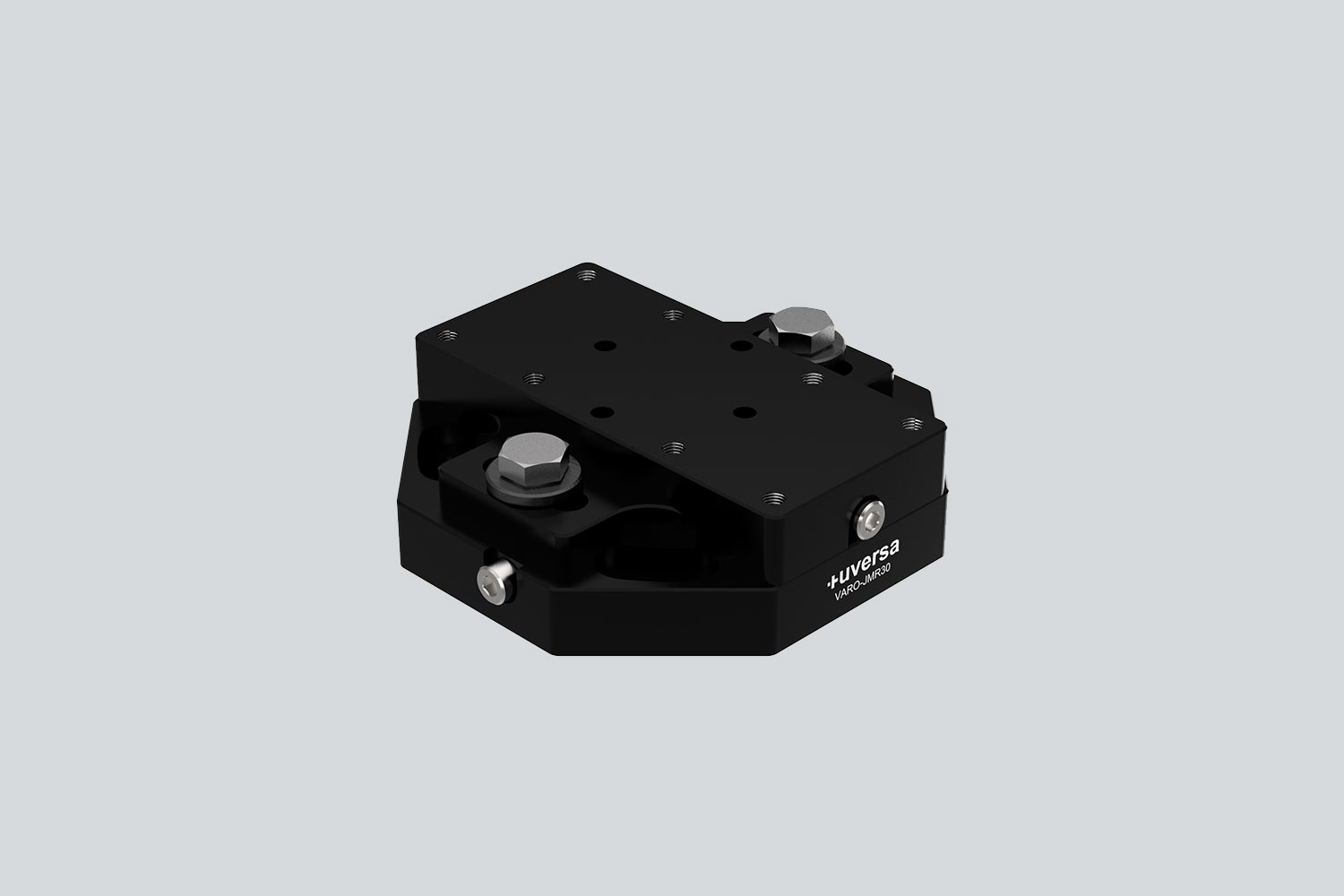
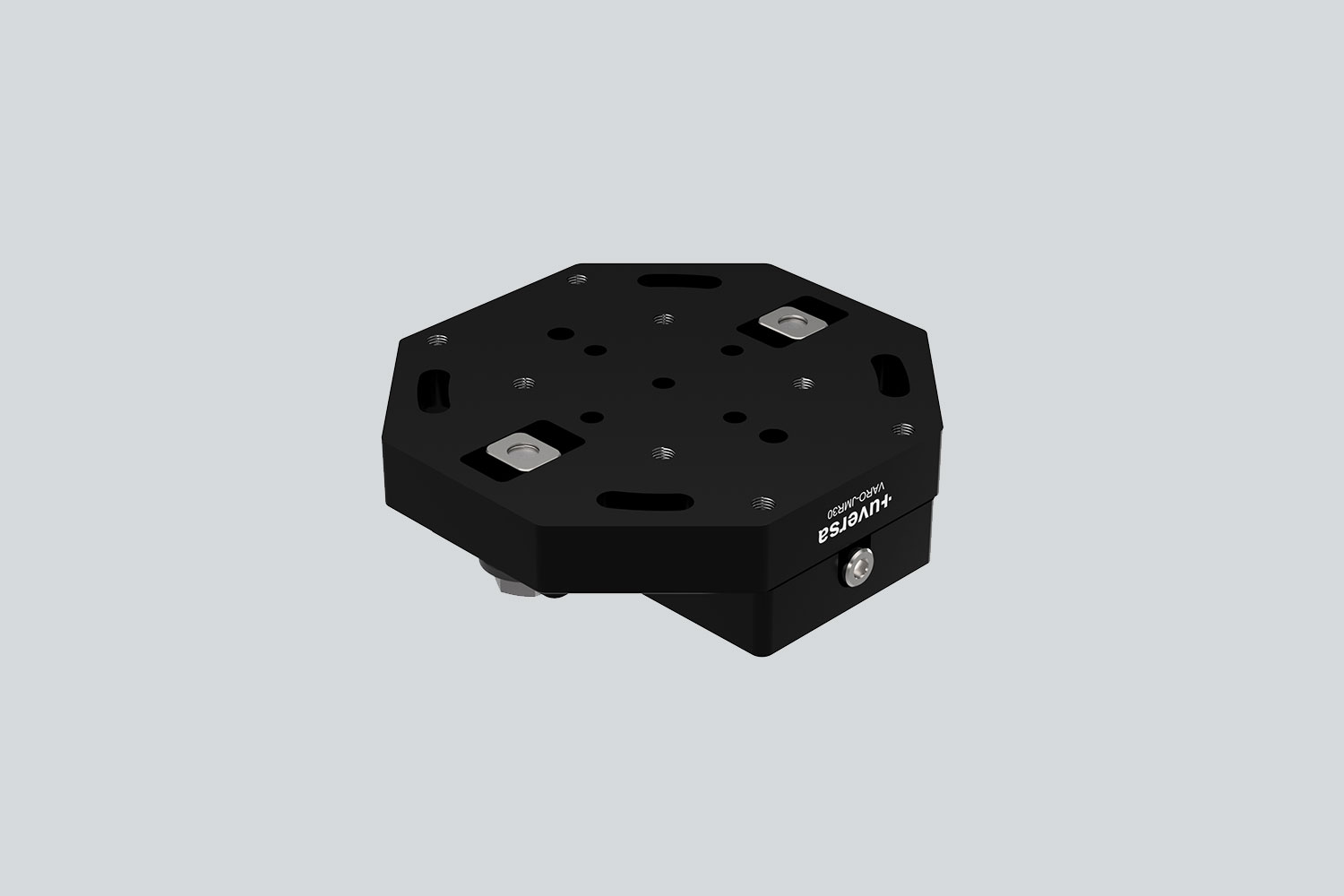
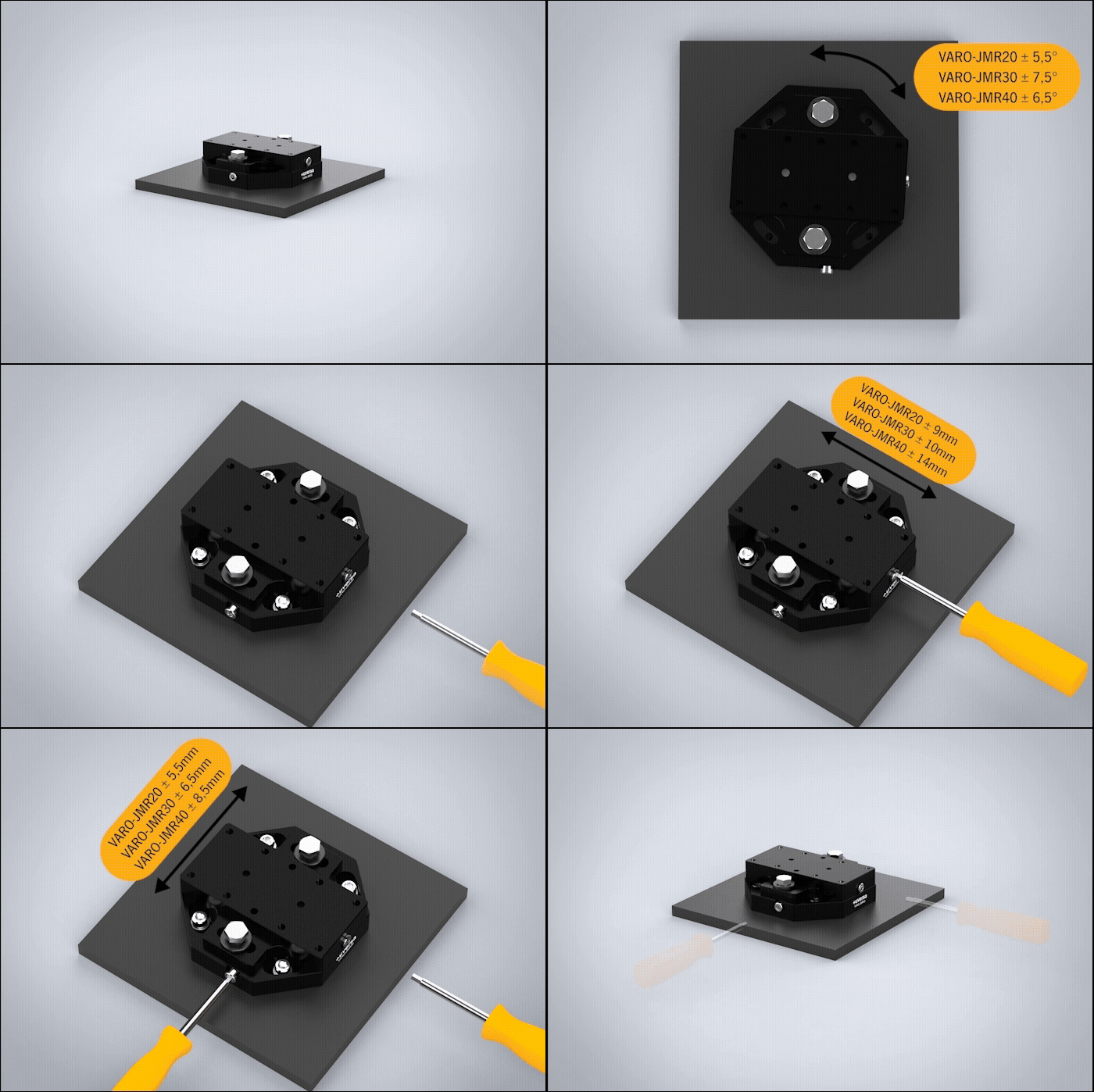
The VARO-JMR30 is the optimized successor to the well-established alignment module VARO-JM30. Featuring an extended adjustment range of ±10 mm in the X direction and ±6.5 mm in the Y direction, as well as a rotational fine adjustment of ±7.5°, it provides maximum flexibility for precise alignment of assemblies.
The VARO-JMR30 Adjustment Module 2.0 is the optimized version of the proven VARO-JM30. Developed specifically for mechanical engineering, it delivers maximum precision for the accurate alignment of assemblies.
The adjustment range is ±10 mm in the X direction and ±6.5 mm in the Y direction. This allows assemblies to be precisely adjusted and manufacturing tolerances to be reliably compensated. The rotational fine adjustment of ±7.5° additionally enables flexible adaptation for even more precise positioning.
The VARO-JMR30 is made of anodized aluminum. It impresses with stability and durability. The module is available in several colors and can also be supplied with an ESD coating upon request, making it ideal for sensitive production areas.
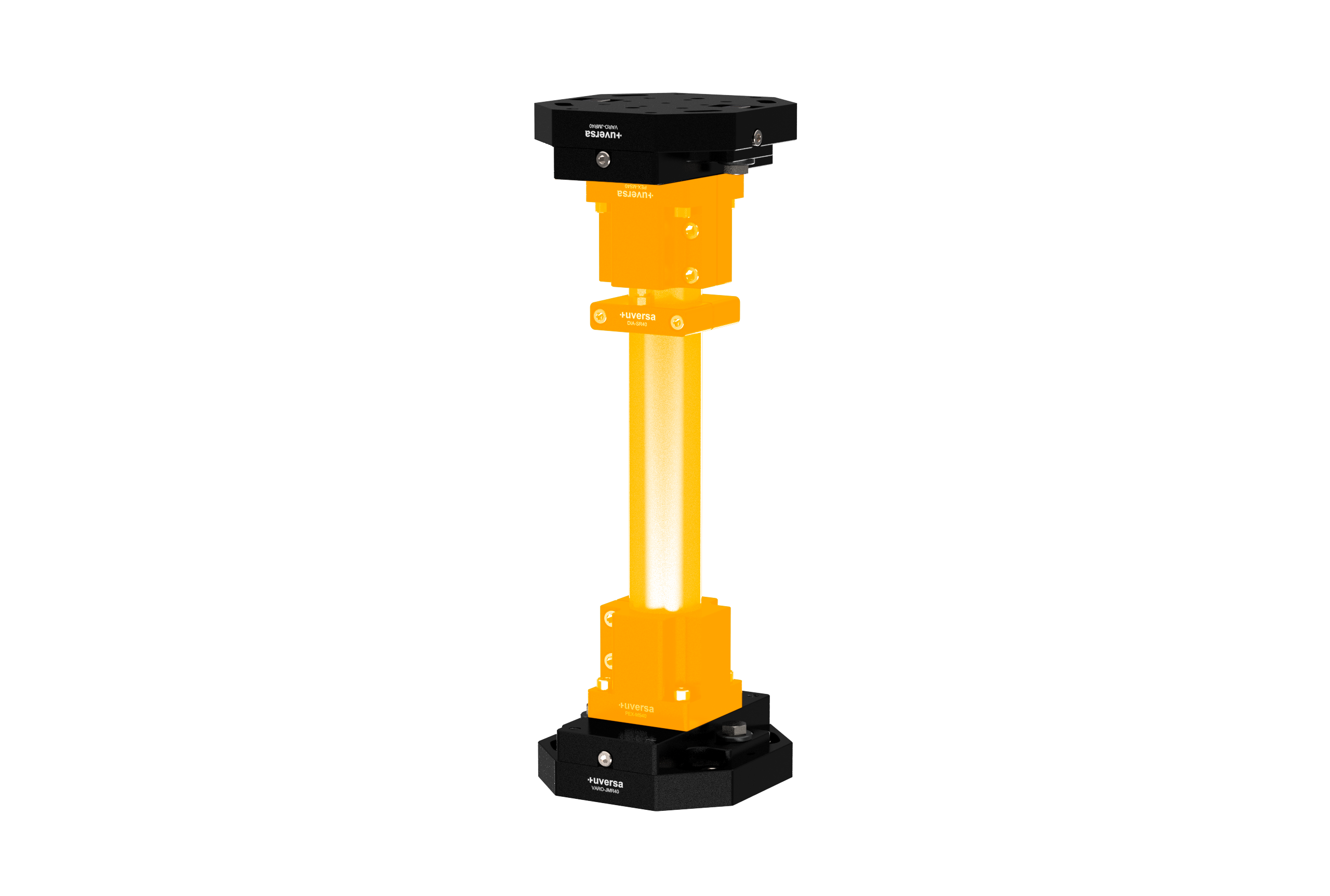
As part of the uversa modular system, the VARO-JMR30 adjustment module can be combined with mono and duo bases. It can also be flexibly expanded with additional modules. Designers and engineers benefit from a wide range of options when creating modular, high-precision machinery and plant engineering concepts.
Compatible modules include PEX-MS30, PEX-DS30, EVO-KM30, EVO-MM30 and EVO-DM30, which can be mounted directly.
| Eigenschaften | Wert |
|---|---|
| Color |
Schwarz eloxiert (Standard), Blau eloxiert, Rot eloxiert, Grün eloxiert, Gold eloxiert, SurTec® 650 (ESD-leitfähig, passiviert) |
| HS code |
90330090 |
| Eigenschaften | Wert |
|---|---|
| Country of origin |
Germany |
| Material |
Aluminum (milled) |
1. What is the VARO-JMR used for?
The VARO-JMR Adjustment Module is designed for the precise adjustment of components in the X/Y plane. It enables targeted compensation of manufacturing tolerances and precise component positioning, significantly simplifying the mechanical design.
2. How does the VARO-JMR differ from the VARO-JM?
The VARO-JMR is the next generation of adjustment modules for mechanical engineering and the consistent evolution of the VARO-JM. It features an extended adjustment range and additional slotted mounting holes that enable both linear and rotational fine adjustment. This allows components to be aligned with greater precision and integrated more flexibly into demanding machine designs.
3. How is the adjustment performed?
Adjustment is performed using side-mounted adjustment screws, allowing the position to be fine-tuned with high precision. Combined with the rotational adjustment capability, this provides a wide adjustment range, offering significant advantages for complex assemblies.
4. How is the VARO-JMR mounted?
The Adjustment Module can be mounted on fixed work surfaces or integrated directly into assemblies. Thanks to its well-designed construction, it is suitable for a wide range of installation positions and adapts flexibly to different design requirements.
5. What variants of the VARO-JMR are available?
The module is made of anodized aluminum and is available in a range of colors. On request, the VARO-JMR is also available as ESD-conductive, passivated, making it suitable for use in ESD-sensitive environments.
6. Which modules is the VARO-JMR compatible with?
As part of the uversa modular system, the VARO-JMR can be seamlessly combined with PEX Mono and Duo Column Bases. It can also be connected directly to modules such as the EVO-KM and EVO-DM, allowing easy integration into existing machine structures.
7. Which applications is the VARO-JMR best suited for?
The VARO-JMR is primarily used in mechanical engineering, fixture construction, and testing and assembly systems. Wherever precise alignment, flexible readjustment, and a modular design are required, it provides a reliable and efficient solution.
These Products could also interest you:
-
Dual-Module 30mm
94,80 € – 146,30 € -

Duo Pedestal 30mm
70,20 € – 88,90 € -

Dual-Traverse-Connector 30-20mm
165,80 € -

Dual-Traverse-Connector 40-30mm
226,40 € -

Clamping-Module 30mm
75,10 € – 92,50 € -

Cross Connector 20-30mm
36,10 € -

Cross Connector 30-30mm
43,60 € -

Mono-Module 30mm
88,20 € – 109,10 € -

Mono Pedestal 30mm
54,90 € – 71,30 € -

Mono-Traverse-Connector 30-20mm
152,20 € -

Mono-Traverse-Connector 40-30mm
189,30 €

Similar Products
-

AWMP | Aluminiumwelle 8–30 mm
2,90 € – 44,10 € -
Dual-Module 30mm
94,80 € – 146,30 € -
Duo Pedestal 30mm
70,20 € – 88,90 € -
Dual-Traverse-Connector 30-20mm
165,80 €